Why Reading Fiction Makes Us More Human
A new podcast, Reasons for Hope, is quietly producing some of the most thoughtful conversations about what it means to live well and do good. The inaugural episode featuring the novelist Elif Shafak is one we think every reader - and every teacher - would enjoy.
About the podcast
Reasons for Hope is hosted by Edward Davey and features weekly conversations with people doing remarkable things in the world. Each episode ends with a practical challenge: one thing you can do, this week, to make things a little better. It is warm, unhurried, and hopeful.
Elif Shafak on fiction, empathy, and inflated egos
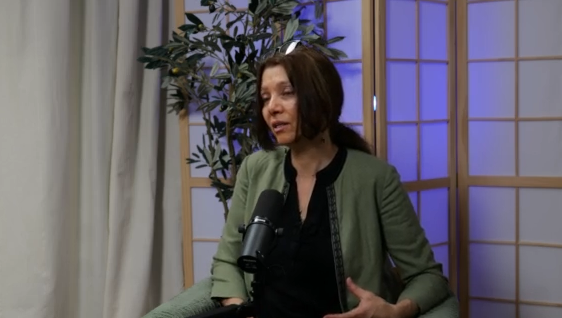
Elif Shafak is one of the most widely read living novelists. In this episode she makes a powerful case for fiction that goes far beyond entertainment. She challenges a familiar assumption - that fiction is somehow less serious than history, philosophy or data - and argues persuasively that this misunderstands what stories actually do.
"In the English language, we use the word fiction as if it were the opposite of fact. To the contrary, fiction is very interested in truth and it brings us closer to truth."
"In the English language, we use the word fiction as if it were the opposite of fact. To the contrary, fiction is very interested in truth and it brings us closer to truth."
This is not just a defence of novels. It is a claim about how human beings understand one another. When we read, Shafak argues, we briefly become someone else. We inhabit a different perspective, carry a different weight, see through different eyes. "That's a very humbling exercise for our inflated egos," she says.
Libraries, disadvantage, and the spaces we must not close
A striking passage in the conversation is Shafak's defence of the communcal physical spaces where reading happens - libraries, youth centres, literary festivals. These are not luxuries, she argues. For many children, they are the only way out.
"Sometimes these are the only platforms where a child from a disadvantaged background can transcend the little boxes that we have unfairly pushed him or her into."
"Sometimes these are the only platforms where a child from a disadvantaged background can transcend the little boxes that we have unfairly pushed him or her into."
She goes on to make a point that may deserve far wider attention: literature is the least supported and least funded sector across the entire UK. Of all private funding that goes into culture, literature receives less than 3% - and even that has been falling. "It breaks my heart," she says. "And not many people know this."
Her argument is not sentimental. It is structural. When we close libraries and defund literary culture, we do not simply remove books from shelves. We remove the spaces where children slow down, encounter ideas, and discover that their inner world is worth something. "We have to invest, especially in times of crisis - not less, but all the more - in culture. We have to invest in literature."
The difference between information and wisdom
Shafak draws a distinction that feels urgent in an age of hyperinformation. Scrolling is not reading. Data is not knowledge. Sound bites are not wisdom. "Our brains are not wired" for the relentless noise of social media, she says. What we need are the slower, deeper encounters that literature makes possible.
Literary festivals, she suggests, are a model for this: spaces where people do not have to agree on everything, but do have time for each other and for ideas. "I'm talking about knowledge. I'm talking about wisdom. I'm talking about empathy."
Stories are what we remember
Shafak also draws on research that will feel familiar to anyone who has thought carefully about learning. When information is delivered through data and visuals alone, more than half of it has evaporated within 24 hours. Three days later, nearly three-quarters is gone. But stories - imperfect, emotional, human stories - stay with us.
She closes with a line attributed to Maya Angelou: people may forget what you said, and even what you did, but they will never forget how you made them feel. Her advice to listeners is simple: read more fiction, and give books as gifts.
Empathy Lab: building what Shafak describes
If Shafak articulates the case for empathy through literature, Empathy Lab is one of the organisations doing systematic work to make it a reality. Founded on the principle that empathy is learnable - and that books are one of the most powerful tools to build it - Empathy Lab works with children and educators to use high-quality literature as a foundation for empathy education.
Their foudning ambition was to benefit one million children by 2026, helping each one understand what empathy is, why it matters, and how to put it into practice. They describe a world in which every child is "a wonderful listener, inspired to put empathy into action" - and they are working, school by school and book by book, to make it real.
The science is catching up with what many teachers have long sensed. A three-year research project at the University of Sussex - the Reading Feelings project, led by Professors Jane Oakhill, Alan Garnham and Robin Banerjee and funded by the ESRC - has found that children's reading and empathy develop side by side, each strengthening the other. Better readers showed higher cognitive empathy over time. More empathic children became more engaged readers. And when children were actively encouraged to notice and name characters' feelings as they read, their empathy improved more than through reading alone.
The research also confirms that discussing stories with peers helped children reflect more deeply on characters' experiences - and improved their ability to recognise emotions in real life. This suggests that how we read with children matters as much as whether they read at all. Emotionally rich encounters with stories, supported by conversation and reflection, are what build the deeper skill. These findings are explored further in published work from the project, including Morris (2023) on reading, empathy and Theory of Mind and Oakhill (2023) on mentalising skills, prosocial behaviour and everyday reading.
It is hard to listen to Elif Shafak and not think of this work. The vision is the same: that literature is not a soft extra, but a serious tool for building the kind of people - and the kind of world - we actually want.
Why this matters for reading teachers
At ReadingWise, we believe that building a reading habit is about more than decoding and comprehension skills - though those matter enormously. It is also about helping young people discover that stories are worth the effort. That reading fiction is not a break from real thinking; it is some of the most important thinking we do.
The Sussex findings speak directly to what structured comprehension activities make possible. Our Comprehension module is built around exactly this kind of engaged, reflective encounter with fiction - and our comprehension mini-skills are designed to prompt children to notice characters' feelings, discuss what they have read, and think carefully about motive, emotion and consequence. If the research is right - and we think it is - these are not just reading activities. They are empathy activities too.
Shafak's words, and the work of organisations like Empathy Lab, are a reminder of the stakes. Reading is not just an academic skill. It is how we learn to be human together.
Listen now
You can find Reasons for Hope with Edward Davey on spotify, an dperhaps elsewhere. We recommend starting with the Elif Shafak episode.